


Diabetic Foot Infection: Signs That Mean You Need Surgery Urgently
A diabetic foot infection can arise from an apparently minor injury such as a blister, scrape, or cut. The combination of decreased sensation, poor circulation, and impaired healing common to diabetes can allow an infection to become severe before it is noticed
While some diabetic foot infections are relatively straightforward to treat by antibiotics and careful wound care, others require immediate surgical intervention to avoid infection spreading to deeper tissues or even the bone. Being aware of the warning signs of a diabetic foot infection can help you get timely treatment to prevent complications.
If you have diabetes and notice a wound on your foot, or notice any swelling, pus, or discoloration, you should see an experienced cosmetic surgeon like Dr. Geetika Paliwal in Indore, who will be able to assess the situation and recommend the most appropriate treatment.
What Is a Diabetic Foot Infection?
A diabetic foot infection occurs when bacteria invade the breaks in the skin, for instance, ulcers, cuts, blisters, or wounds. Diabetic neuropathy reduces the ability to feel pain from an injury, and diabetes can restrict blood flow and impair healing. Thus, even minor injuries must be taken seriously by the diabetic patient.
When Is Surgery Needed to Treat a Diabetic Foot Infection?
Most diabetic foot infections can be managed without surgery, especially when diagnosed and treated early. However, surgical treatment may be necessary when the infection becomes severe or causes significant tissue damage. Surgery may be considered when there is:
- Gangrene or dead tissue in the affected area
- A deep or extensive abscess that needs drainage
- Severe cellulitis or rapidly spreading infection
- Compartment syndrome causing increased pressure within the tissues
- Significantly reduced blood flow to the affected foot
- Infection that has spread into deeper tissues or bone
- Extensive infected or damaged tissue that needs to be removed
In moderate to severe diabetic foot infections, surgery may sometimes be performed within 24–48 hours of hospital admission, along with appropriate antibiotic treatment. The timing and type of surgery depend on several factors, including the severity of the infection, blood circulation to the foot, involvement of deeper tissues or bone, and the patient’s overall health.
Signs That May Indicate That Surgery Is Required Immediately
The signs that may indicate that surgery is needed for a diabetic foot infection include:
1. Black or Dead-Looking Tissue Around the Wound
Black, dark brown, or dead-looking tissues around the wound indicate gangrene. Gangrene can develop as a result of poor blood circulation or severe infection. When there is gangrene present, the infection has compromised tissue viability. Therefore, it must be surgically excised.
2. Pus or a Deep Collection of Infection
Pus draining from the wound is a typical indicator of an abscess. A deep infection in the tissues beneath the skin is another warning sign. If a diabetic foot infection results in the formation of an abscess, it frequently needs to be surgically drained.
3. Rapidly Spreading Redness or Swelling
Redness and swelling that quickly spread beyond the affected region are also warning signs. It suggests that the infection is spreading and reaching deeper tissues and needs to be surgically addressed.
4. Severe Swelling or Tightness in the Foot
Crippling discomfort or swelling could be a sign of compartment syndrome, which is a surgical emergency.
5. Unpleasant Odor Coming From the Wound
If an ulcer or infected region has a foul odor, it could be a warning sign. This symptom frequently occurs with pus, dead tissue, and/or redness and swelling. A foul-smelling wound is another warning sign that the infection has spread far enough to require surgery.
6. Fever, Chills, or Feeling Ill
High temperatures, chills, and feeling unwell are examples of systemic symptoms that can arise in cases of severe diabetic foot infection. According to the IWGDF/IDSA, these are significant warning signs that necessitate immediate surgery since the infection may spread beyond the afflicted region and affect the whole body, potentially becoming life-threatening.
7. Coolness or Change in the Color of the Skin
The lack of proper blood circulation to the feet can lead to them becoming abnormally chilly. Cyanosis causes the skin to turn bluish or greyish. When infection, peripheral artery disease, or severe ischaemia occurs, the limb may exhibit pallor or cyanosis. It is critical to have the situation evaluated by a specialist since it may necessitate vascular surgery or require immediate intervention.
8. The Infection Has Spread Into the Bone
A diabetic foot infection that extends into the bones is a severe condition. Osteomyelitis is an infection of the foot bones that frequently requires surgical intervention. The choice to perform surgery is influenced by the existence of other complicating disorders, the infection’s severity, and the extent of tissue damage. Surgery may be used to remove the infected tissue, drain the abscess, and, in some situations, improve blood flow to the lower extremities.
Surgical Procedures for a Diabetic Foot Infection
Surgery for a diabetic foot infection usually involves a debridement procedure, which removes infected and dead tissue, thus, helping to reduce the infection and promote tissue repair. An incision and drainage may also be required if an abscess is present. If the infection has reached the bone, surgery to remove the affected portion may be recommended. Vascular surgery options may also be considered if blood circulation is impaired. Amputation is an option if the infection cannot be brought under control by other means, but the main goal is to save as much healthy tissue as possible.
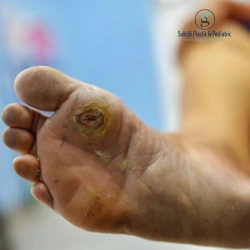
Importance of Timely Treatment for Diabetic Foot Infections
A diabetic foot infection occurs when bacteria invade the broken part of the skin, and the infection can penetrate deep into the tissues, joints, and bones. Combined with poor circulation, the infection can lead to poor wound healing and tissue necrosis. Diabetic neuropathy can cause a diabetic patient to be unaware of the injury, so he/she cannot take proper measures to heal the wound or seek medical care. Thus, any diabetic patient should regularly inspect their feet and contact a medical professional at the first sight of an ulcer or wound.
When to Contact a Surgeon?
If you have diabetes and notice black spots on your feet, rapidly spreading infection, pus discharge, deep swelling, or worsening wounds, it is important to seek medical attention promptly. Fever, feeling unwell, significant swelling, or feet that appear blue, pale, or unusually cold may indicate a more serious infection or reduced blood flow.
You should also consult a surgeon if the infected area is large, an existing ulcer is becoming worse, or there are signs of extensive tissue damage. These symptoms do not always mean that major surgery will be required, but they do need timely medical evaluation.
For proper assessment and treatment of a diabetic foot infection, consult Dr. Geetika Paliwal. Early evaluation can help control the infection, protect healthy tissue, and reduce the risk of further complications.
Conclusion
Diabetic foot infections must always be taken seriously, as they can lead to devastating complications if not properly treated. While some diabetic foot infections are only superficial and respond well to conservative treatment, others invade deeper tissues and even the bone. Gangrene, abscesses, extensive infection, and reduced circulation are all conditions that necessitate surgery to manage the infection and prevent additional complications. If you have diabetes and notice that you have an ulcer that is not healing or that the infection is spreading, you should contact Dr. Geetika Paliwal, best plastic surgeon in Indore to discuss the most appropriate course of therapy.
FAQs
No. Mild infections may sometimes be treated with wound care and antibiotics. Surgery is generally considered when there is deep infection, dead tissue, abscess, gangrene or other serious complications.
Black tissue, pus, rapidly spreading redness, severe swelling, fever, reduced blood flow and deep wounds are warning signs that require urgent medical assessment.
Yes. An untreated or deep infection can spread to the underlying bone and cause osteomyelitis.
Debridement is a procedure in which dead, damaged or infected tissue is removed from the wound to help control infection and support healing.
Black or dead-looking tissue can be a sign of tissue death or gangrene. It should be evaluated urgently by a medical professional.
Some infections can be managed with antibiotics, but deep abscesses, extensive dead tissue, gangrene or certain severe infections may require surgery as well.
No. Diabetic neuropathy can reduce sensation, so even a serious wound or infection may cause little pain.
A deep collection of pus usually requires urgent assessment, and surgical drainage may be needed to control the infection.
Timely surgical treatment, wound care, antibiotics and management of blood circulation can help control infection and preserve healthy tissue. Outcomes depend on the severity of each case.
Dr. Geetika Paliwal is a plastic and cosmetic surgeon in Indore who provides consultation and treatment for a range of reconstructive, cosmetic, and wound-related concerns, including diabetic foot complications.


- Address : Sukriti clinic, Scheme no 74, CH 3, Near Prestige College, Opposite Vrindavan Restaurant, Indore, Madhya Pradesh 452010
-
Phone : +91 702 402 3943,
+91 992 666 3943 - Email : info@sukriticlinic.com