


All about Tongue-Tie (Ankyloglossia) Symptoms, Causes & Treatment
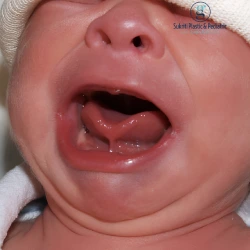
Tongue-tie, or ankyloglossia, is a congenital condition in which the band of tissue connecting the bottom of the tongue to the floor of the mouth is unusually short or thick. This tissue is called the lingual frenulum.
While it may not cause any problems in some babies, a tight or thick frenulum may restrict movement of the tongue and lead to problems with breastfeeding or feeding, oral hygiene, or speech later in life
Parents who observe restricted feeding or movement of the tongue in their child should consult Dr. Saurabh Garge, Pediatric Surgeon in Indore, who can evaluate the issue and recommend whether the condition is likely to cause problems and whether intervention is necessary.
What Is Tongue-Tie?
Typically, the tongue is able to move freely within the mouth and from the mouth. A functioning frenulum allows the tongue to move up and out, and from side to side.
In babies born with ankyloglossia, the frenulum does not allow for the same range of motion.
Depending on the location and severity, in some cases the short frenulum may not cause any difficulties, while in others it may restrict movement of the tongue or make breastfeeding challenging for the baby.
An experienced pediatric surgeon in Indore will assess each case individually to determine whether intervention is necessary.
Causes of Tongue-Tie
Ankyloglossia occurs in utero.In typical pregnancies, the tissue connecting the tongue to the floor of the mouth elongates and begins to thin out, allowing for greater range of motion of the tongue.
In pregnancies resulting in ankyloglossia, some of that tissue remains shorter and thicker than average.
The reason for this occurrence is unknown, though it often appears to run in families. Ankyloglossia is not caused by anything the mother did or did not do during pregnancy.
Symptoms of Tongue-Tie in Babies
One of the most common side effects of ankyloglossia is breastfeeding difficulty. Common symptoms in babies with this condition may include:
- Difficulty latching onto the breast
- Clicking or choking noises when nursing
- Short or shallow feeds
- Feeding for a prolonged period of time
- Easily becoming tired or fussy during feeding sessions
- Constant hunger or desire to nurse, without apparent satisfaction
- Poor weight gain
- Inability to extend the tongue
- Difficulty lifting the tongue to the upper gums
- Heart-shaped appearance of the tongue when extended
However, poor latch or other feeding difficulties can have many causes. The fact that a baby has a short frenulum does not automatically mean that it is the cause of the issue.
Ankyloglossia may not always become apparent in the first year of life. Symptoms in older children may include:
- Inability to extend the tongue
- Reduced side-to-side motion of the tongue
- Difficulty licking around the lips
- Inability to clean food from the teeth
- Challenges with specific oral activities
- Speech difficulties in selected cases
In many cases, the child may not have any difficulties at all and simply require observation. However, in some instances, surgical intervention may be required.
How Can Tongue-Tie Affect Breastfeeding?
Babies use active motion of the tongue to nurse. If the baby’s frenulum is too short and rigid, it may impede this motion, causing difficulties with latching or prolonged, labored feeding.
Mothers may also experience discomfort, soreness, or damage to the nipples, requiring extra care. They may also feel the need to nurse more frequently or have difficulty with breast emptying.
Before recommending a frenulotomy, the doctor will examine the baby to rule out any other issues that may be restricting nursing.
Tongue-Tie May Cause Speech Problems
Issues with the motion of the tongue can sometimes cause speech difficulties. However, the fact that a child has ankyloglossia does not automatically indicate that they will have speech delays or disorders. Many children with restricted frenulum do not experience these issues.
If speech challenges do appear, they should be addressed by a qualified professional. Both a pediatric surgeon and a speech-language pathologist can evaluate the problem and recommend treatment.
Does Every Tongue-Tie Need Treatment?
No. A short frenulum that does not restrict movement of the tongue or cause any other issues does not necessarily need to be treated.
If the restricted frenulum is not causing feeding or speech difficulties, oral health issues, or restricted motion of the tongue, it may simply be observed.
Treatment may be recommended if restricted frenulum is the source of any of these difficulties. Parents should not decide to have their child’s frenulum surgically released simply because it appeared short.
Tongue-Tie Surgery and Pain
Depending on the age and needs of the child, the procedure may be more or less involved. A simple frenotomy on an infant typically involves a different technique and form of anesthesia than a frenuloplasty on an older child.
Parents will receive instructions based on the type of procedure their child has undergone, regarding feeding, pain management, wound care, and restrictions on activity.
What Happens After Tongue-Tie Treatment?
Following treatment for ankyloglossia, parents may notice greater range of motion in their child’s tongue, though it may take some time before the child adjusts to the new motion and feeding becomes easier.
In some cases, breastfeeding support may still be needed following surgery. Children who have had frenulotomy or frenuloplasty as treatment for speech difficulties may require additional speech therapy, as releasing the frenulum does not always correct speech patterns.
Risks With Tongue-Tie Surgery
Any surgical procedure carries certain risks. Potential complications of frenulotomy or frenuloplasty may include:
- Bleeding
- Pain or discomfort
- Infection
- Scarring
- Reattachment of the frenulum
- Lingual issues persisting after surgery
The appropriate patient selection and type of procedure reduce the risk of these complications occurring.
When Should Parents Consult a Pediatric Surgeon?
Parents should consult a pediatric surgeon if their child:
- Has persistent feeding difficulties
- Is having trouble latching
- Is not able to gain weight
- Has severely restricted tongue motion
- Has difficulty extending or lifting the tongue
- Has difficulties with eating, feeding, or oral hygiene
- Has speech difficulties related to restricted motion of the tongue
The doctor will assess whether ankyloglossia is the cause of the child’s difficulties and what treatment, if any, is required.
Conclusion
Ankyloglossia, or tongue-tie, is a common condition in infants and children, but not every child with tongue-tie requires surgery. The need for treatment depends on how much the restricted tongue movement is affecting breastfeeding, feeding, swallowing, speech development, oral hygiene, or other daily activities. Parents who notice difficulty in nursing, limited tongue movement, problems while eating, or speech-related concerns can consult Dr. Saurabh Garge, Best Pediatric Surgeon in Indore, for a detailed evaluation. After examining the child and understanding the severity of the condition, the doctor can determine whether observation, supportive care, or a procedure such as frenulotomy or frenuloplasty is appropriate. A timely assessment helps avoid unnecessary treatment while ensuring that children who genuinely need intervention receive the right care at the right time, allowing parents to make an informed decision based on their child’s individual needs.
FAQ's
Tongue-tie, or ankyloglossia, is a condition in which the tissue under the tongue is unusually short or tight, restricting normal tongue movement.
Symptoms may include difficulty breastfeeding, poor latch, clicking during feeds, limited tongue movement, difficulty sticking the tongue out, and a heart-shaped tongue tip.
Parents can consult Dr. Saurabh Garge, Pediatric Surgeon in Indore, for assessment of tongue-tie and advice regarding whether treatment is necessary.
No. Mild tongue-tie that does not cause feeding or functional problems may not require treatment. Surgery is usually considered when tongue restriction is causing significant difficulties.
Yes, significant tongue restriction can sometimes affect the baby’s ability to latch and feed effectively. However, breastfeeding difficulties can have many other causes, so proper assessment is important.
Frenotomy is a procedure in which the restrictive tissue under the tongue is released to improve tongue mobility. It is commonly performed in selected babies with functionally significant tongue-tie.
Tongue-tie can be evaluated and treated at different ages, depending on the symptoms and how much it affects feeding, speech, or tongue movement. The appropriate timing of treatment is decided after assessing the child’s individual condition.
Tongue-tie can be evaluated and treated at different ages, depending on the symptoms and how much it affects feeding, speech, or tongue movement. The appropriate timing of treatment is decided after assessing the child’s individual condition.
Tongue-tie may contribute to speech difficulties in some children, but many children with tongue-tie develop normal speech. A proper assessment helps determine whether restricted tongue movement is contributing to the problem.
Frenotomy involves releasing the tight frenulum, while frenuloplasty is a more detailed surgical procedure that may involve repositioning and suturing the tissue. The appropriate procedure depends on the individual case.
Parents searching for a best pediatric surgeon in Indore for tongue-tie treatment can consult Dr. Saurabh Garge for evaluation of ankyloglossia, feeding difficulties, and suitable treatment options.


- Address : Sukriti clinic, Scheme no 74, CH 3, Near Prestige College, Opposite Vrindavan Restaurant, Indore, Madhya Pradesh 452010
-
Phone : +91 702 402 3943,
+91 992 666 3943 - Email : info@sukriticlinic.com