


Burn Scar Treatment in Indore: What Can and Cannot Be Improved?
Burn injuries can leave behind scars that impact their appearance as well as function. Depending on where they are located and their depth, burn scars can lead to tightness, itchiness, discomfort, limited mobility or even a lowered self-esteem. Patients considering burn scar treatment often wonder whether their scars can be completely removed. A common question is, can burn scars be removed completely?
The reality is that most treatments aim to improve the condition of a scar rather than remove it. The potential for improvement depends on the type, depth and location of the scar, the quality of one’s skin and the length of time since the injury.
In case of considering burn scar treatment in Indore, an evaluation by Dr. Geetika Paliwal, plastic surgeon in Indore can help establish realistic expectations about the outcomes.
Why Do Burn Scars Occur?
When there is a burn injury that affects the deeper layer of the skin, the body begins repairing the affected tissues and growing new collagen in the burned area. The formation of excessive or abnormal collagen can lead to the appearance of a burn scar.
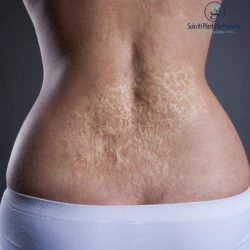
Depending on the type and depth of the burn, the scar can have a different appearance and texture. Some scars are flat but differ in color from the surrounding skin. Others can be thick and raised. In severe situations, burn scars can be so serious that they begin affecting one’s functionality by contracting and limiting movements.
What Can Improvement of Burn Scars Entail?
Depending on the characteristics of each individual scar, treatment for burn scars can focus on reducing specific symptoms. This may include improving raised or thickened scars, reducing tightness and contractures, easing itching or discomfort, improving skin texture, and restoring movement when a scar restricts a joint or body part.
Treatment may involve options such as scar revision, Z-plasty, skin grafting, laser-based procedures, injections, or reconstructive surgery. The most suitable approach depends on the scar’s location, depth, age, and effect on function. The aim is usually to make the scar less troublesome and improve comfort, movement, and appearance rather than remove it completely.
Treatment of Thick or Raised Scars
Hypertrophic or keloid scars are thick and raised above the skin level. Depending on the age and severity of the scar, certain treatment options can help flatten and reduce it. Raised burn scar treatment can be planned according to the thickness, location and condition of the scar.
Alleviating Scar Tightness and Limitation of Movements
One of the primary functions of plastic and reconstructive surgery is the restoration of function. When burn scars appear on those parts of the body where movements are restricted, the plastic surgeon will attempt to restore range of motion. Tight burn scar treatment may be considered when scar tissue begins limiting normal movement.
For instance, in case of burn scar contracture, a plastic surgeon can perform a procedure to release the tightened area and re-establish a normal range of movements. Burn scar contracture treatment can therefore focus on improving movement after a burn scar as well as reducing tightness.
Improving the Appearance of Scar Texture
Depending on the type of a scar, its rough texture and unevenness can be partially improved with specific scar revision techniques. However, complete restoration of the skin’s texture is not possible in certain cases.
Re-shaping the Scar Area
A plastic surgeon can adjust the shape of a scar by removing its prominent part and suturing the edges with a view to concealing the mark within natural skin folds or modifying it to match the skin all around.
Restoring the Functionality of Burnt Areas
Lorem ipsum dolor sit amet, consectetur adipiscing elit. Ut elit tellus, luctus nec ullamcorper mattis, pulvinar dapibus leo.
What Scar Improvements Are Not Possible?
In spite of the variety of available treatments for burn scars, there are certain limitations that should be understood prior to undergoing surgery.
Scar revision surgery cannot remove the scar completely; at best, the revision can reduce the unevenness of the skin. Moreover, the area where the burn occurred will always retain some distinctive features, depending on the severity of the injury.
It is also unlikely that the color of the scar will match the skin tone on either side of it. Another limitation of burn scar treatment options is the impossibility of fully restoring the original softness and texture of the skin.
Therefore, the aim of burn scar revision treatments is to achieve gradual and significant improvement rather than total removal of the unsightly mark.
What Treatment Options Are Available for Burn Scars?
Treatment depends on the scar’s age, depth, location, and effect on movement. Options may include:
- Z-Plasty for scar contractures
- Skin grafting for damaged or tight skin
- Flap surgery for deeper scars
- Scar revision surgery to improve appearance or function
- Silicone gels or sheets for selected raised scars
- Laser treatment to improve texture, thickness, or colour
A plastic surgeon can recommend the most suitable option based on the individual scar.
When Should One See a Plastic Surgeon for Burn Scar Treatment?
One should consider consulting a plastic surgeon in the case of significant burn scarring that creates discomfort or restricts movements. If the burn scar is located on a highly visible part of the body, such as the face, neck or joints, or if it creates discomfort or itchiness, one should consider burn scar revision treatments. Early intervention is especially important in the case of burn scars on the hands, neck or joints as they have the potential to severely limit one’s movements.
Conclusion
Each burn scar is unique in its formation, which is why the best treatment option can only be determined during a personal consultation. The plastic surgeon will examine the scar and discuss one’s expectations prior to determining the most viable course of action.
To receive professional advice and undergo a thorough medical examination for burn scars, scar contractures, burn reconstruction in Indore or other conditions, book an appointment with Dr. Geetika Paliwal, Plastic & Reconstructive Surgeon in Indore.
FAQs
Burn scars generally cannot be completely erased, but their appearance, texture, tightness or functional impact may often be improved.
Yes. Even older burn scars may be suitable for treatment depending on their type, location and severity.
A burn scar contracture occurs when scar tissue tightens and pulls the surrounding skin, sometimes restricting movement.
In suitable cases, reconstructive surgery can release tight scar tissue and help improve movement.
Plastic and reconstructive surgeons commonly evaluate and treat complex burn scars and post-burn contractures.
Certain treatments may help soften and flatten raised or hypertrophic burn scars, although results vary between patients.
Colour differences may improve in some patients, but completely restoring the original skin colour is not always possible.
Skin grafting may be considered when scar tissue needs to be released or an area requires additional skin coverage.
Seek assessment if the scar becomes tight, painful, itchy, raised or starts restricting movement.
A plastic surgeon needs to examine the scar’s location, depth, age, texture and effect on function before recommending treatment.


- Address : Sukriti clinic, Scheme no 74, CH 3, Near Prestige College, Opposite Vrindavan Restaurant, Indore, Madhya Pradesh 452010
-
Phone : +91 702 402 3943,
+91 992 666 3943 - Email : info@sukriticlinic.com