


Lower Limb Reconstruction After a Road Accident
Road accidents can cause serious injuries to the leg, including not only the skin, but also muscles, tendons, blood vessels, nerves, and bones. In some cases, a serious wound can form, which cannot be closed normally, or the leg tissues are exposed. Such injuries may require lower limb reconstruction to restore tissue coverage and promote healing.
Patients with complex leg injuries can consult with Dr. Geetika Paliwal, reconstructive specialist in Indore at Sukriti Clinic, for reconstruction and treatment based on the nature of the injury.
What Is Lower Limb Reconstruction?
Reconstruction of the lower limbs is a type of surgery used to repair large tissue defects and complex wounds of the thigh, knee, leg, ankle, or foot. Road traffic accidents can cause crushing injuries, open fractures, tissue loss, or wounds exposing the bone. Reconstruction involves repairing the defect with healthy tissue to provide coverage and protection. The primary goals of lower limb reconstruction include:
- Covering the exposed bone, tendons, or joints
- Promoting wound healing
- Preventing infection
- Maintaining limb function where possible
- Providing long-term soft-tissue coverage
- Enabling the patient to undergo rehabilitation
- Enhancing wound contour and appearance
Why Can Road Accidents Cause Complex Leg Injuries?
The lower limb may suffer severe damage during a road accident because it experiences significant force. The injury may affect the skin, muscles, tendons, nerves, blood vessels and bones. Some patients may have deep wounds, loss of soft tissue, open fractures or exposed bones and implants.
Because these injuries can be complex, treatment may involve orthopedic surgeons, plastic and reconstructive surgeons, vascular surgeons and rehabilitation specialists.
When Is Lower Limb Reconstruction Needed?
Not all leg injuries require reconstruction. Some wounds may require conservative management with primary closure if the tissue loss is minor. Reconstruction may be considered for extensive tissue loss, exposed bone or tendon, inability to close the wound, open fracture that requires soft-tissue coverage, impaired wound healing, or post-surgical tissue loss. Moreover, reconstruction may be indicated to provide healthy tissue coverage over orthopedic implants when appropriate. The specific method of reconstruction is chosen based on an evaluation by a good plastic surgeon in Indore of the wound and injury.
Treatment for Severe Lower Limb Injuries After a Road Accident
Before considering reconstruction, the patient’s general condition and the injured limb need to be stabilized. Appropriate measures should be taken to control active bleeding, clean the wound, remove dead tissue, manage fractures, assess circulation, and treat infection when present.
Removal of devitalized tissue is an essential step in the management of many traumatic wounds. Reconstruction is typically planned after the wound has been appropriately managed and is ready for coverage.
Types of Lower Limb Reconstruction
Various techniques can be considered for lower limb reconstruction, depending on the nature and extent of the wound.
Primary Closure
Small wounds that are free from contamination and tension may allow primary closure of the incision with stitches.
Skin Grafting
A skin graft involves harvesting a thin layer of the skin from a donor site (typically the thigh or buttocks) and placing it over the wound. Skin grafts may be considered for wounds with a relatively good bed of tissue, but they are not suitable for wounds involving exposed bone, tendons, joints, or other critical structures.
Local Flap Reconstruction
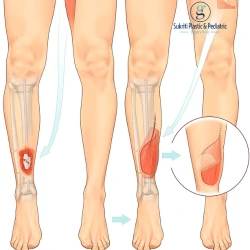
A local flap is a flap of skin, tissue, or muscle that is harvested from the area around the injury and placed into the defect to cover it. Local flaps are usually suitable for selected wounds based on the location and available tissue in the region.
Muscle Flaps
Muscle flaps typically involve using tissue from a nearby region to achieve coverage of a deep wound, bone, or other structure.
Free Flap Reconstruction
This technique is typically used for complex tissue defects. A free flap involves transferring a tissue flap with its blood vessels from one part of the body to the injured region. The vessels of the flap are then connected to blood vessels at the recipient site using microvascular surgical techniques. A free flap may be considered for wounds when local tissue is not suitable or has been largely destroyed.
Reconstruction for Open Fractures
An open fracture occurs when the broken bone pierces the skin, causing an open wound. These fractures can present with extensive soft tissue damage in addition to the injury to the bone. Orthopedic treatment may be required to stabilize the fracture, while reconstruction provides coverage of the soft tissues. The coordination between the orthopedic and reconstructive surgeons is crucial in cases of severe lower limb trauma.
Role of Physiotherapy and Rehabilitation
Physiotherapy may be an essential component of the rehabilitation following major lower limb reconstruction. Physiotherapy can help restore joint movements and muscle strength, as well as balance and walking ability. The rehabilitation process depends on the nature and severity of the fractures, nerve damage, muscle injury, and the specific reconstructive procedure performed. Since recovery after a road accident can be prolonged, the role of physiotherapy and rehabilitation is vital.
When Should You Consult a Reconstructive Surgeon?
A reconstructive surgical opinion should be sought in cases of extensive skin or muscle loss after a road accident, exposed bone or tendon, open fractures, wounds that cannot be closed, non-healing wounds, or tissue damage around orthopedic implants. Severe injuries involving the foot, ankle, or leg also require early assessment by a reconstructive surgeon.
Treatment options for wound coverage and lower limb reconstruction depend on the type and severity of the injury. For road accident injury treatment, limb salvage surgery, wound reconstruction, and lower limb reconstruction in Indore, consult Dr. Geetika Paliwal, best reconstructive plastic surgeon in Indore at Sukriti Clinic.
Conclusion
Road accidents often involve complex injuries to the lower limbs, which require individualized care due to the varied presentation of each case. The appropriate reconstructive technique depends on the size and location of the wound, its blood supply, the nature of any fractures, the condition of the surrounding tissues, and the patient’s overall health.
Patients with complex injuries to the lower limb can consult Dr. Geetika Paliwal, top plastic surgeon in Indore for assessment of traumatic wounds and suitable reconstructive options. The goal of lower limb reconstruction is to provide reliable tissue coverage, protect the important structures underneath, and assist the patient in returning to an active lifestyle.
FAQs
Lower limb reconstruction includes surgical procedures used to repair severe injuries involving the skin, muscles, tendons, bones, or other tissues of the leg after trauma.
It may be required when there is significant tissue loss, exposed bone or tendon, an open fracture, or a wound that cannot be closed normally.
Patients with complex traumatic leg wounds can consult Dr. Geetika Paliwal in Indore for reconstructive evaluation and discussion of suitable treatment options.
A skin graft may be suitable for certain wounds with a healthy tissue bed. Deeper wounds with exposed bone, tendon, or joints may require flap reconstruction instead.
Flap surgery involves moving healthy tissue with its blood supply to cover a wound and protect exposed structures.
Free flap reconstruction involves transferring healthy tissue from another body area and connecting its blood vessels to vessels near the injured area using microsurgery.
Dr. Geetika Paliwal, a reconstructive plastic surgeon in Indore, treats complex road accident wounds involving the legs, feet, skin, muscles, bones, and exposed implants. Patients can consult her at Sukriti Clinic for a detailed assessment and a personalised plan for wound reconstruction, tissue coverage, and limb salvage surgery.
Recovery depends on the severity of the injury, fractures, tissue damage, reconstruction method, and rehabilitation requirements. Major injuries may require a longer recovery period.
Physiotherapy is often an important part of recovery, especially when the injury affects movement, muscle strength, joints, or walking ability.
In selected cases, reconstruction can provide necessary soft-tissue coverage and contribute to limb-preservation efforts. However, whether limb salvage is possible depends on the severity of damage to bone, blood vessels, nerves, and other tissues.


- Address : Sukriti clinic, Scheme no 74, CH 3, Near Prestige College, Opposite Vrindavan Restaurant, Indore, Madhya Pradesh 452010
-
Phone : +91 702 402 3943,
+91 992 666 3943 - Email : info@sukriticlinic.com